


Happy April! In celebration of National Poetry Month, we’ve developed this guide of influential poems to teach figurative language. Poems are all about figurative and hidden meanings, so they’re a great way to familiarize oneself with abstract language.
This collection features all kinds of poems—short and long, rhyming and free verse, modern and traditional! Understanding the wide variety and versatility of figurative language is a necessary ELA skill, so we hope these can aid students in learning it on their own or help educators teach it.
The Basic Types of Figurative Language
In order to discuss these amazing poems packed with literary devices, let’s have a brief refresher on some of the most common and important types of figurative language. These devices transform literal language (which means only the sum of the words it contains, no more) into figurative language, which is abstract and means more than what lies on the surface. We’re covering the basics of 6 types of figurative language that every student must know:
- Simile
- Metaphor
- Personification
- Oxymoron
- Hyperbole
- Allusion
Why is Figurative Language Used in Poetry?
You might wonder, why do writers use literary devices to convey ideas they can describe in literal language? Literal language comes with limitations—your options for descriptive language are limited to adjectives and adverbs. Especially in the world of poetry, figurative language helps writers be more creative, exact, and eloquent with their descriptions because they’re able to draw on the reader’s imagination.
An important product of figurative language is imagery—a writing technique that utilizes highly descriptive language to invoke (one or more of) the reader’s senses, highly valuable in the world of poetry. Often, imagery is developed with both the use of descriptive language and precise figurative language (especially similes and metaphors).
Example: The baby pink cherry blossom petals trembled in the wind like the small hands of a frightened child.
In the above example, the descriptive language (baby pink…trembled…) in conjunction with a simile (…like the small hands of a frightened child) develop imagery that appeals to the reader’s sense of sight—you can visualize the fluttering petals with the help of figurative language.
Note: If you struggle with understanding these concepts, look into our ELA courses! Each course has a thorough lesson and dozens of practice questions about figurative language, which can help you understand literary devices and set you up for poetic and literary success.
Twelve Poems to Teach Figurative Language
1. “[I wandered lonely as a Cloud]” by William Wordsworth
William Wordsworth (1770-1850) is known for his influence on English romanticism, a movement in literature and art that focused on subjectivity and emotions. In [I wandered lonely as a Cloud], Wordsworth takes the reader on a journey from the perspective of a cloud, floating in the sky and gazing at Earth’s beauty. Four stanzas long and with a clear rhyme scheme (ABABCC, DEDEFF…), this poem is a beautiful example of the vivid imagery that can come from a well-developed simile, vibrant descriptions, and personification of the natural world.
“I wandered lonely as a Cloud
That floats on high o’er Vales and Hills,
When all at once I saw a crowd,
A host of golden Daffodils;” (lines 1-4)
2. “Having a Coke with You” by Frank O’Hara
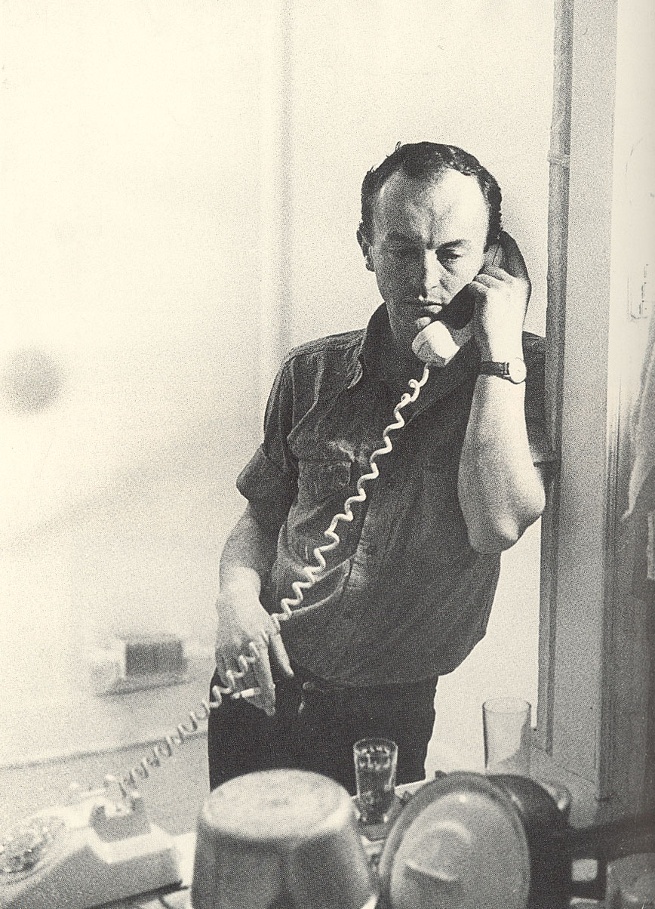
Frank O’Hara.
Frank O’Hara (1926-1966) was one of the most famous members of the New York School of poetry, a group of Manhattan-based experimental poets who included humor and cultural moments in their work. O’Hara’s “Having a Coke with You” is something of a love poem, enriched with imagery, similes, and, most impactfully, allusions to historical and cultural concepts. He uses allusions to make grand comparisons between his love for the person he’s speaking to and culturally celebrated artworks, landmarks, and people.
“I look
at you and I would rather look at you than all the
portraits in the world
except possibly for the Polish Rider occasionally and
anyway it’s in the Frick
which thank heavens you haven’t gone to yet so we
can go together for the first time,” (lines 25-31).
3. “Because I could not stop for Death” by Emily Dickinson
Emily Dickenson (1830-1886) is one of the most celebrated American poets, despite having none of her work published until after her death. Accordingly, “Because I could not stop for Death” is a poem both serene and morbid, in which Dickenson personifies the concept of death into a gentle and kind individual who drives people (including herself) to the afterlife with a carriage. Dickenson’s use of personification is simple, yet it lays the groundwork for a very emotional poem, throughout which she uses crisp imagery to describe what she and Death pass while in their carriage.
“Because I could not stop for Death—
He kindly stopped for me—
The Carriage held but just Ourselves—
And Immortality,” (lines 1-4).
4. “Still I Rise” by Maya Angelou
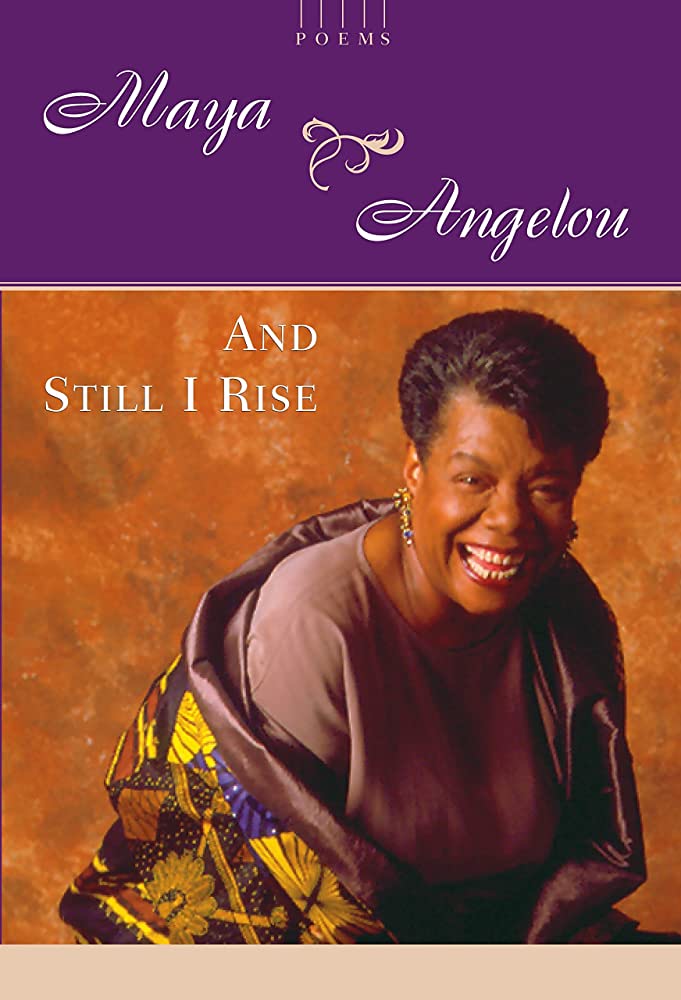
Maya Angelou’s Poetry Collection, “And Still I Rise”.
Maya Angelou (1928-2014) is an acclaimed poet, author (of essays and children’s books), and civil rights activist who used personal narrative and figurative language in discussion of themes such as racism and identity. “Still I Rise” is one of her most celebrated works, the title poem for her third volume of poetry, And Still I Rise. In this piece, she masterfully utilizes several similes and metaphors to convey her determination to rise above discrimination and celebrate herself as an individual.
“…You may trod me in the very dirt
But still, like dust, I’ll rise.
Does my sassiness upset you?
Why are you beset with gloom?
’Cause I walk like I’ve got oil wells
Pumping in my living room,” (lines 3-8).
5. “Blackberrying” by Sylvia Plath
Sylvia Plath (1932-1963) is known for the feminist themes in her work and her influence on the genre of confessional poetry (which is characterized by a focus on personal experience and blurring the lines between “public” and “private” information). Written into “Blackberrying” is a thorough metaphor about the inevitability of death, conveyed through similes plump with meaning, personification of nature, and hyperbolic details about a blackberry field.
“Nobody in the lane, and nothing, nothing but blackberries,
Blackberries on either side, though on the right mainly,
A blackberry alley, going down in hooks, and a sea
Somewhere at the end of it, heaving,” (lines 1-4).
6. “The South” by Langston Hughes
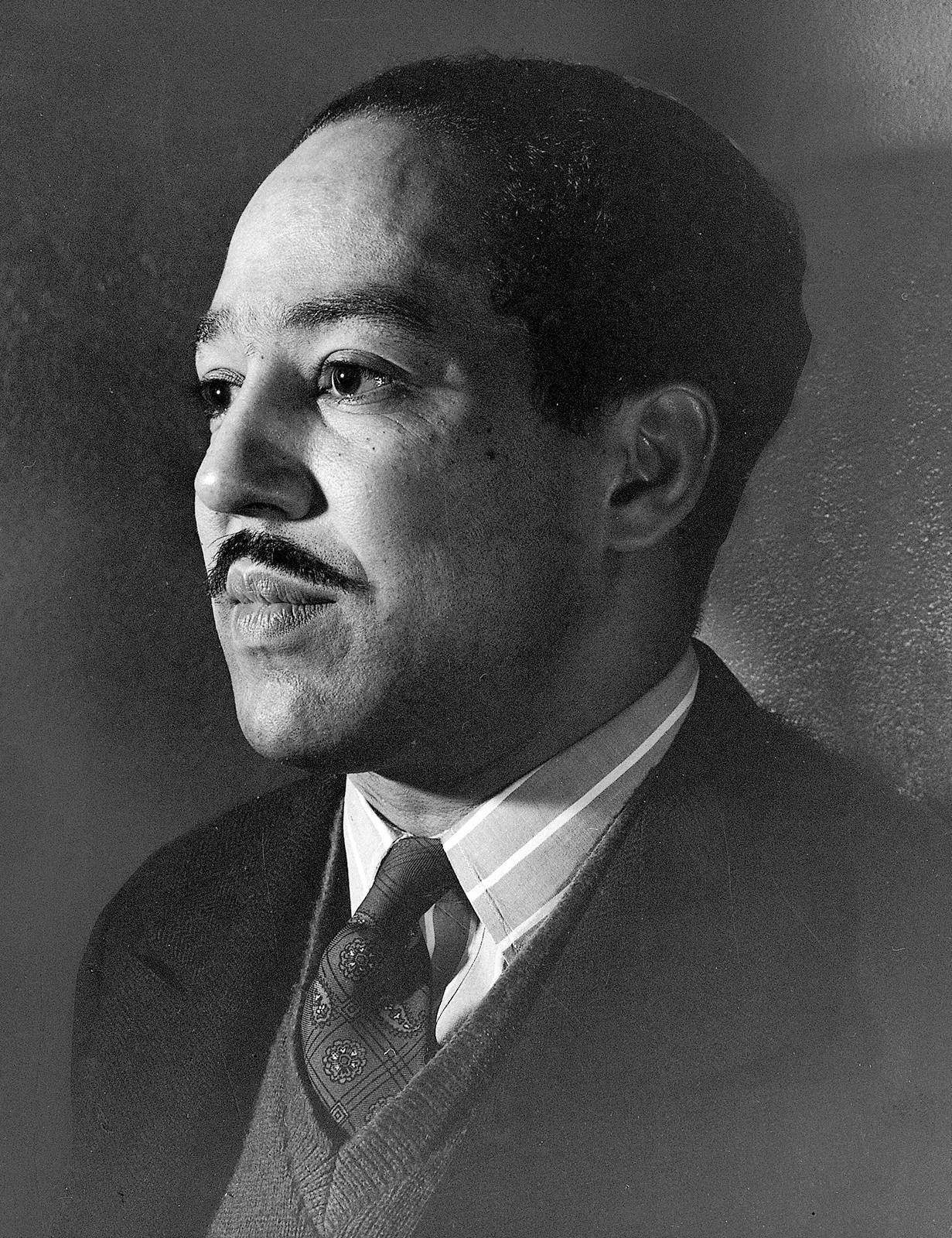
Langston Hughes.
A vital figure in the Harlem Renaissance, Langston Hughes (1901-1967) is known for his insightful and rich poems and other fiction writing about the experiences of Black Americans in the mid-20th century. “The South” is his description of the strange relationship he, as a Black man, has with the southern United States, post-Civil War and in the time of Jim Crow laws—the South is beautiful but abusive, conveyed through his personification of it as a woman he loves. The poem is like a lengthy oxymoron, as Hughes grapples with both the beauty and ugliness of the South, and the personification and gorgeous natural imagery emphasize the pain in the relationship he describes. `
“Passionate, cruel,
Honey-lipped…—
That is the South.
And I, who am black, would love her
But she spits in my face,” (lines 15-19).
7. “Onions” by William Matthews
Don’t read this next poem while you’re waiting for lunch or dinner… it’ll just make you more hungry.
American poet William Matthews (1942-1997) wrote an impressive count of eleven poetry books, with most works focusing on aspects of human nature, influenced by cultural elements like jazz music. In “Onions”, Matthews’ use of figures of speech and personifying language work in tandem to develop imagery that captivates the reader’s senses as we explore the role of onions in the cooking and eating we do each day.
“Slowly the onions
go limp and then nacreous
and then what cookbooks call clear,
though if they were eyes you could see
clearly the cataracts in them,” (lines 9-13).
8. “Sonnet 65: Since brass, nor stone, nor earth, nor boundless sea” by William Shakespeare
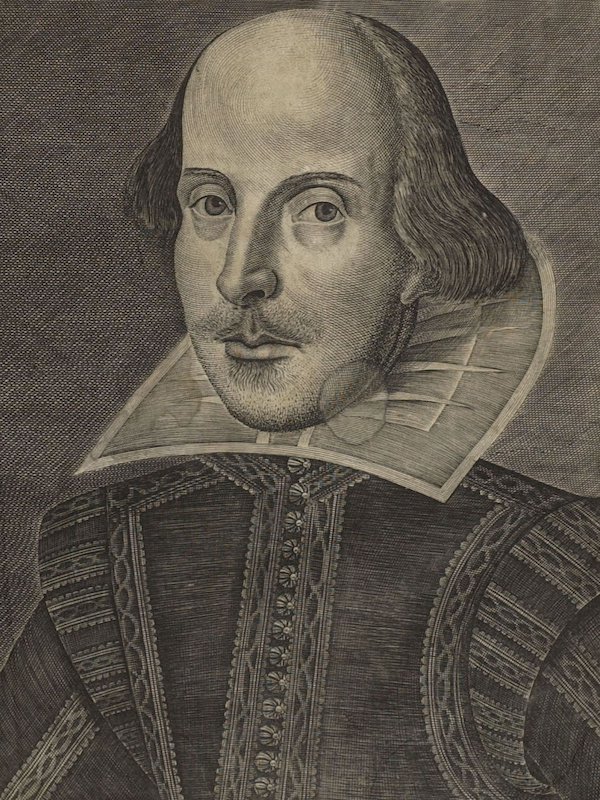
William Shakespeare.
We cannot make a list of poems to teach figurative language without mentioning William Shakespeare (1564-1616), a figure that many would call a master of figurative language.
Shakespeare is most known for his plays, but he also wrote many poems in his lifetime, including almost 150 sonnets—poems of 14 lines that stick with a particular rhyme scheme (ABAB CDCD EFEF GG). “Sonnet 65” grapples with the mortality of everything, even the strongest materials and objects—his personification of both substances and time demonstrate that nothing lasts forever; that one should enjoy it all while it lasts.
“O, how shall summer’s honey breath hold out
Against the wrackful siege of batt’ring days,
When rocks impregnable are not so stout,
Nor gates of steel so strong, but time decays?” (lines 4-7).
9. “September 2” by Wendell Berry
A poet and farmer, Wendell Berry (1934–) is a defender of agrarian life against the obtrusive reach of modern technology. The focus of his writing, which spans over 50 books of poetry, essays, and fiction, is nature and the wonders of life. As an environmentalist, he champions the idea that humans must live in harmony with nature.
His poems have been likened to those of Wordsworth and other masters of pastoral poetry. Rhyme takes a backseat to a more natural rhythm as the beat behind Berry’s poems emulates the melodies of plants, animals, and even emotions. In “September 2“, he brings focus to nighthawks and how they represent the soft ending of a day working during harvest season. With figurative language, the poem outlines the dark silhouettes of the birds and conveys the feeling of autumn dusk on the farm.
“In the evening there were flocks of nighthawks
passing southward over the valley. The tall
sunflowers stood, burning on their stalks
to cold seed, by the still river.” (lines 1-4)
10. “The Garden of Proserpine” by Algernon Charles Swinburne
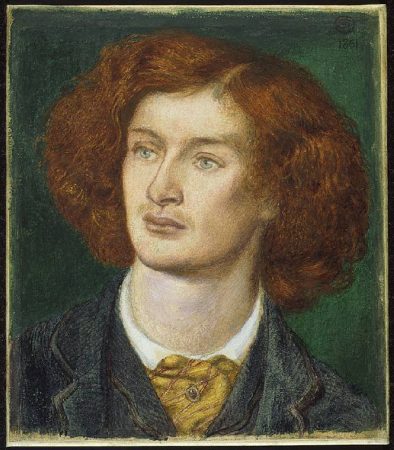
Algernon Charles Swinburne.
While poems about the harvest season are great, we’re in spring after all! In “The Garden of Proserpine“, Algernon Charles Swinburne (1837–1909) alludes to the Greek myth of Persephone as the subject matter while he contemplates the contrast between everyday life—fleeting and chaotic—and death, an eternal sleep. Sad subject matter is no stranger to Swinburne, a figurehead in the era of Victorian poetry.
In this poem, a rather sorrowful spring is illustrated with lyrical expertise—the rhyme scheme is intense, the stylistic devices (such as alliteration and assonance) are prolific, and both subjects and background serve symbolic purpose.
“No growth of moor or coppice,
No heather-flower or vine,
But bloomless buds of poppies,
Green grapes of Proserpine,
Pale beds of blowing rushes
Where no leaf blooms or blushes
Save this whereout she crushes
For dead men deadly wine.” (lines 25-32)
11. “I Have News for You” by Tony Hoagland
For another example of the poets of today, Tony Hoagland (1953-2018) was an esteemed contemporary poet and teacher whose works capture everyday modern American life. In “I Have News for You“, Hoagland uses similes and rich language to describe everyday situations with clarity to reach his central idea against what he describes as a bad habit: overthinking.
“I have read about a town somewhere in California where human beings
do not send their sinuous feeder roots
deep into the potting soil of others’ emotional lives
as if they were greedy six-year-olds
sucking the last half-inch of milkshake up through a noisy straw;” (lines 8-12)
12. “To Sleep” by John Keats
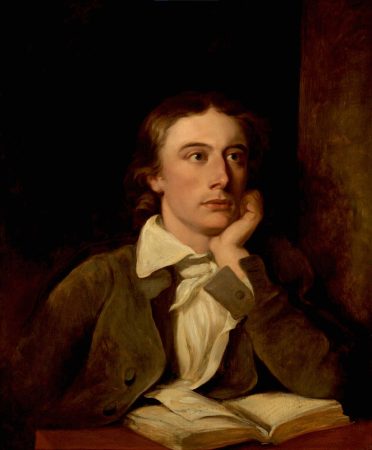
John Keats.
Perhaps no work in this collection of poems to teach figurative language resonates more strongly with students than this last feature among these poems to teach figurative language. “To Sleep” is an ode to the warm embrace of sleep when you wake up in the morning, written by one of the most famous English poets of all time, John Keats (1795–1821).
Keats wrote just 54 poems before he died at 25, trying his hand at all sorts of poetic forms and traditions. Some of his most celebrated poems are odes, poems that praise someone or something, and “To Sleep” is one of them. Within the rhyme scheme (ABAB CDCD…), personification is what drives this poem, describing the “careful fingers” of sleep shutting the speaker’s eyes to protect them from the frightening “Conscience”.
“”O soothest Sleep! if so it please thee, close
In midst of this thine hymn my willing eyes,
Or wait the “Amen,” ere thy poppy throws
Around my bed its lulling charities.
Then save me, or the passed day will shine
Upon my pillow, breeding many woes,—” (lines 5-10)
Improve Reading and Writing Skills with Piqosity
Happy national poetry month! We hope you found this selection of poems to teach figurative language insightful and inspirational. These examples of figurative poetry are a great way to familiarize yourself or your students with literary devices—they demonstrate how versatile and effective tools like similes, personification, and hyperboles can be.
If you’re struggling with concepts like figurative language or looking for ways to improve your English skills, Piqosity’s here to help! Along with our ISEE, SAT, and ACT test prep courses, we also offer full online Math and English courses—each includes dozens of concept lessons, personalized practice software, and over 100 reading comprehension passages.
Piqosity’s ELA Courses
- 5th Grade English Course
- 6th Grade English Course
- 7th Grade English Course
- 8th Grade English Course
- 9th Grade English Course
- 10th Grade English Course
- 11th Grade English Course
The best part? You can try out all of Piqosity’s features with our free community account, which feature a free mini diagnostic exam to evaluate your current ELA skills. When you’re ready to upgrade, Piqosity’s year-long accounts start at only $89.


Leave A Comment
You must be logged in to post a comment.